


When I was a kid, I remember hearing that old Irish blessing: “May the road rise up to meet you. May the wind always be at your back. May the sun shine warm upon your face, and rains fall soft upon your fields. And until we meet again, May God hold you in the palm of His hand.” And thinking it was the most beautiful thing I had ever heard.
Although snippets of this evocative poem now sit firmly on the rib cage of many a bogan getting their first tattoo in Bali, the sentiment still resonates. Especially as a recent Horticulture graduate from Melbourne Polytechnic, Fairfield campus.
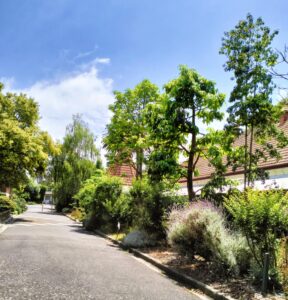
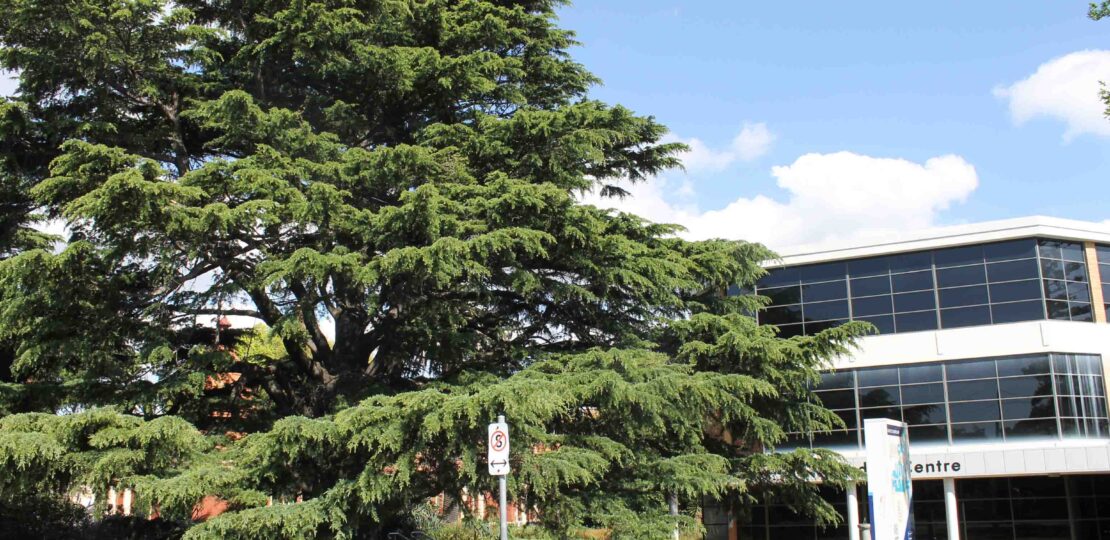
Imagine, if you will, that this lyrical road was the well-worn gravel path ambling down to the revered AIDS garden. That metaphorical wind the glacial Melbourne Southwesterly, caressing the creaking branches of the heritage-protected Cedrus deodara tree towering outside the Wi-Fi free library. That poetic sun the same unrelenting sun that burned your face when you were mapping out the boundaries of a convoluted reveg sight on a steep escarpment of the Yarra. Those soft rains the same downpour that caused you to slip and almost stack dramatically near the potting shed. And the hand of God being Bush Tucker Man Ray’s magical ability to turn barren lands into fields of golden sunflowers, with a mere toss of inexpensive supermarket birdseed.
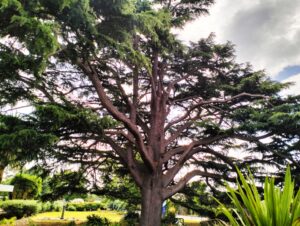
I, like many of my classmates, decided on an impetuous whim to study Horticulture. Some fellow students claimed that they felt the almost palpable compulsion to suddenly pursue a bright future of recognising the difference between a gymnosperm and an angiosperm, or the distinction between parallel, palmate and pinnate venation (they never said that, but this is to show Plant Oracle Richard that I always paid attention in his Plant ID class!).
I woke up on a distinctly bleak Melbourne day in the dead of winter last June, and decided that I truly wanted to feel the warm sun on my face and the wind at my back every day. I wanted to witness the beauty of new growth, observe the miraculous processes of propagation and cultivation, endure the bittersweet lesson of plant disease or death, be surrounded by all the different shades of green, the cacophony of colour and shapes in all the different inflorescence, the grounding sensation of cool dirt between my fingers. To feel the soft rain on the fields that I sowed myself. To discover a world outside my own smug collection of supposedly rare indoor cultivars (Pink Princess or Poo Princess Philodendron erubescens amiright?).
I thought I might also occasionally enjoy the vision of a brawny landscaper in 90s service-station sunnies, toiling to the operatic notes of Bow River live while inhaling an Iced Coffee and ciggie breakfast.
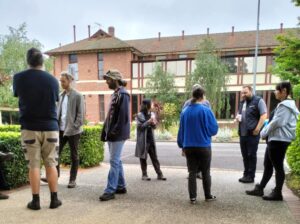
I wanted to experience something as close to spirituality as one can tangibly achieve- while remaining, quite literally, down to earth. Instead of God holding me in the palm of his hand, I would be holding new life, growth and hope in the palms of my Melbourne Polytechnic gloves.
Horticulture seems to be a therapeutic process for so many of us. An antidepressant without the prescription. A light sunny path, when many other paths were perhaps leading down dark shadowy roads. Of course, many students had a specific vocation or passion in mind when pursuing Horticulture: development of new cultivars, landscape design, habitat creation, revegetation etc.- which are all incredibly worthy aspirations- but some of us had simply hit that metaphorical bump in the road of our lives that only time in nature could smooth out. As the quote goes, to plant a garden is to believe in tomorrow.
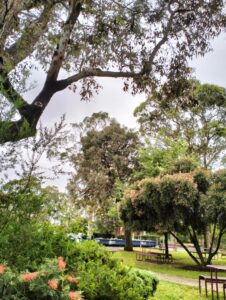
There is something incredibly humbling about being surrounded by plants that predate the mundanity of our own existence. Plants don’t care about ego, or war, or taxes. There is something inherently divine in nurturing the patience to watch a seed germinate and slowly grow into a majestic plant, to watch a three-month old cutting suddenly sprout roots in the greenhouse- seemingly overnight (much to Propagation Queen Deb’s shared excitement), or to wait for the first shiny fruit borne of an apple tree that you planted as part of Science Wizard David’s 85 page Soils assignment. And to know that many of these plants may actually outlive us. To continue on in their own stoic way, long after we turn into stardust (or worm food-imagine the biological diversity and nutrient availability in that soil!).
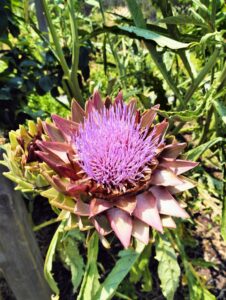
In this age of technology and instant dopamine fixes that require very little effort or outlay in return for immediate gratification, the study of plants forces us to slow right down to examine the unhurried minutiae of processes that are essential to our ecosystem, our planet, and humanity as a whole.
I will admit that some days as a student on the Hort frontlines were incredibly difficult. I am quite spatially dyslexic (left and right?! On the left side, there’s nothing right. And on the right side, there’s nothing left!), so landscape design and drawing maps filled me with abject fear (sorry Garden Design Gurus Mike & Chloe). And, as all my teachers could irritably attest to- I was also definitely not a morning person. This was profoundly blasphemous towards the Hort religion, as all true Horticulturalists are up at the crack of dawn, admiring the morning dew glistening like diamonds on the Telopea speciosissimas.
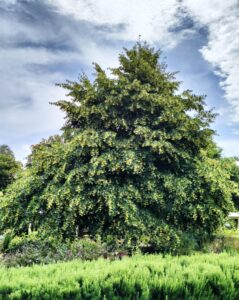
There were dozens of anxious tears, but ten times as many absurd laughs and earnest exclamations of “ooh that’s amazing!” as my classmates and I bonded with each other over new discoveries and successes like giddy children playing in mud. We were affectionately referred to as the “class of stray cats”- due in no small part to our tendency to inevitably wander off to dreamily explore the monocots and dicots, the zygomorphic and actinomorphic flowers, or keep a watchful eye for anything we could identify, propagate or press. But we always returned home- with a fistful of new plants. We had never been more interested in the humble grass as we quickly became; after observing Richard and Bryan wax lyrical about various types of turf and the approx 1,323 different native grasses in Australia. We were like a bunch of misfit wizards at Hortwarts, watching the omniscient teachers weave their green spells.
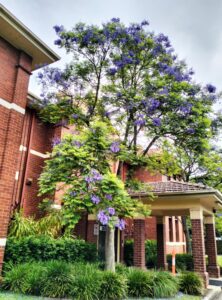
Studying horticulture is serious business- but it can also be incredibly heartfelt and fun. Every mistake or failed experiment was a lesson, every seemingly impossible situation would lead to a proud resolution if we persevered, but most of all- there was nothing funnier than being in a small class with a bunch of over-stimulated, under-slept dreamers and a host of eccentric teachers. How can anyone take a lesson seriously when there is a weed called a Sticky Willy.
Humans have evolved over thousands of years to be living on the land, and to depend on the land to allow them to live. To first forage for berries and nuts, then to eventually progress to growing and farming their own produce. To be instinctively attuned to our climate, our seasons, our ever-changing environmental surroundings, with our hands wrist-deep in dirt for our survival.
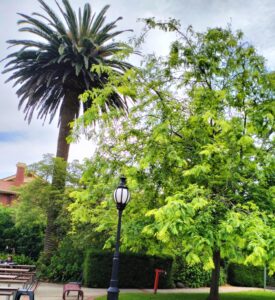
Perhaps we are also designed to forever be like excited kids playing in the soil: filled with a sense of joy and wonderment in the surroundings of nature. And now as newly blooming Horticulturists (who were once undifferentiated meristematic cells, but have grown into bright Melbourne Polytechnic flowers)- we may never lose that joy.
RELATED POSTS
View all


Watching Agamemnon
October 24, 2024 | by Bridget Webster
